
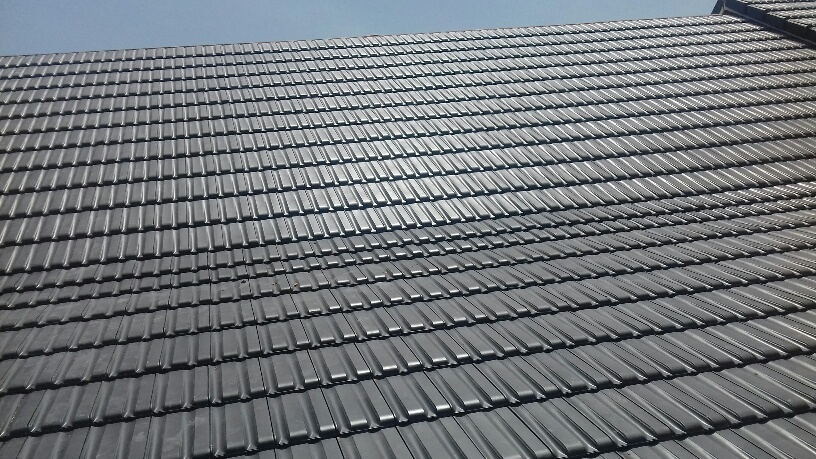
In Essex County, roofing isn’t a one-size-fits-all job. A tidy ranch in Livingston, a century-old home in Montclair, a brick mixed-use building in Newark, and a multifamily property in Bloomfield can all sit under the same forecast, wind-driven rain, snow load, freeze-thaw cycles, summer heat, and still need completely different roofing strategies. That’s the reality of working in Northern New Jersey.
Learn more: Gikas Roofing New Jersey
We see it every day: older decking hidden under layers of past repairs, valleys and dormers that create leak-prone transitions, flat roof sections tied into steep slopes, and storm wear that doesn’t look serious until water starts showing up in the attic or top-floor ceiling. In other words, the roof system matters, but so do the details.
At Gikas Roofing Services, our approach is built around those details. We focus on thorough pre-project inspections, practical recommendations, flexible staging that respects how people live and work on the property, and written workmanship guarantees that give owners something concrete, not vague promises.
If you own a home or commercial building in Essex County, this guide walks through what reliable roofing service should actually look like in : when a repair makes sense, when replacement is smarter, how complex rooflines affect cost and planning, and which materials tend to perform best in New Jersey’s demanding climate.
Why Roofing In Essex County Requires A Specialized Approach
Essex County has one of those housing mixes that keeps roofers honest. We’re not dealing with endless subdivisions of identical homes. We’re dealing with colonials, Victorians, capes, split-levels, brick commercial buildings, converted multifamily properties, and structures that have been added onto, sometimes more than once.
That matters because roofs fail at transitions. Anywhere one slope meets another, anywhere an addition ties into an older structure, anywhere flashing was improvised instead of engineered, the risk goes up. Add in New Jersey weather and those weak points get exposed fast.
A specialized approach means we don’t assume the visible issue is the whole issue. A missing shingle may be the symptom: deteriorated underlayment, failing flashing, soft decking, poor attic ventilation, or ponding water could be the cause. It also means we account for local realities such as mature tree cover, moss and debris accumulation, ice dam risk, and wind exposure on elevated or open lots.
For Essex County properties, good roofing work starts with diagnosis, not guesses. That’s especially true for older homes, where the roof assembly you have on paper may not match what’s actually there.
Residential Roofing Services For Aging And Weather-Exposed Homes
Older homes are some of the most rewarding properties to protect, and some of the easiest to underestimate. On the surface, the roof may look serviceable. But once we inspect it closely, we often find brittle shingles, patched flashing, ventilation imbalances, or decking weakened by years of slow moisture intrusion.
Residential roofing services in Essex County have to be tailored to the house, not just the material. A home built decades ago may have framing dimensions, soffit conditions, or roof geometry that calls for a more deliberate installation plan than newer construction. And weather-exposed homes, especially those hit by strong sun, wind, or overhanging trees, tend to age unevenly. One slope can look fine while another is nearing failure.
Our job is to look at the full system:
Read more: Caldwell Roofing Roofer
- surface material condition
- flashing at chimneys, skylights, walls, and valleys
- attic airflow and heat buildup
- signs of trapped moisture
- deck integrity beneath the roof covering
- drainage performance around gutters and edges
Sometimes the right answer is a targeted repair. Sometimes it’s replacing a deteriorated section before the problem spreads. And sometimes the most cost-effective move is a full roof replacement that stops the cycle of repeated fixes. The key is matching the service to the home’s actual condition, not defaulting to the biggest or cheapest option.
Roof Replacement: When Repairs Are No Longer Enough
A lot of owners ask the same fair question: can we repair this and get a few more years out of it? Sometimes, yes. But there’s a point where repairs stop being efficient and start becoming expensive postponement.
We usually recommend serious consideration of roof replacement when several conditions show up together: recurring leaks in different areas, widespread shingle loss or granule wear, repeated patch history, soft decking, flashing failure at multiple penetrations, or an aging roof that has already reached the latter part of its service life. If a roof has been repaired again and again, each new fix may solve only the latest symptom.
Replacement also makes more sense when the roof has complex geometry. On complicated systems, piecemeal work can leave too many old-to-new transition points. Those transitions are often where future failures develop.
A proper roof replacement isn’t just about installing new material. It’s the opportunity to correct ventilation issues, replace compromised decking, upgrade flashing details, improve water shedding, and create a more durable assembly overall. For Essex County homeowners, that can mean fewer surprise leaks during the next winter storm or summer downpour.
If the roof is costing you confidence every time the weather turns, replacement may not be the expensive option, it may be the stabilizing one.
Roof Repair Services For Leaks, Storm Damage, And Wear
Not every roof needs to be replaced. In many cases, a well-executed repair is exactly the right move, especially when the damage is localized and the rest of the system still has useful life left.
Roof repair services are most effective when they’re specific. “Fix the leak” sounds simple, but leaks rarely travel in straight lines. Water can enter near a chimney flashing detail, follow a rafter bay, and show up several feet away on a ceiling stain. That’s why inspection comes first.
Common repair issues in Northern New Jersey include:
- lifted, cracked, or missing shingles after wind events
- damaged flashing around chimneys, vents, skylights, and walls
- nail pops and exposed fasteners
- small punctures or membrane failures on low-slope sections
- ice-dam-related moisture intrusion
- wear from age, UV exposure, and thermal movement
Storm damage is another category that needs careful handling. Hail, wind, and falling limbs don’t always leave dramatic visible destruction, but they can shorten the life of the roof system if left unaddressed.
Read more: Cedar Grove Roofing Roofer
The difference between a temporary patch and a real repair is whether the underlying cause gets corrected. We aim for repairs that restore function, protect adjacent materials, and fit into the roof’s broader condition, not cosmetic fixes that buy a month and create a bigger problem later.
Commercial Roofing Services For Offices, Multifamily, And Mixed-Use Properties
Commercial roofing in Essex County comes with a different set of pressures. Owners and managers aren’t just thinking about the roof itself: they’re thinking about tenants, business continuity, liability, scheduling, equipment access, and budgets that need to be justified.
Offices, multifamily buildings, retail properties, and mixed-use structures often have flat or low-slope roof areas, rooftop penetrations, drainage challenges, and aging details around parapets or mechanical units. A leak in one of these buildings can affect more than drywall. It can disrupt operations, trigger tenant complaints, damage inventory, and create long-term moisture problems inside wall or ceiling assemblies.
Commercial roofing services should account for:
- occupant safety and access control
- staging that minimizes disruption
- coordination around business hours or tenant needs
- clear documentation of conditions and scope
- durable repair or replacement options suited to the building use
For multifamily and mixed-use properties, communication matters almost as much as the roof work itself. Residents need to know what’s happening. Managers need realistic timelines. Owners need solutions that balance immediate cost with long-term performance.
That’s why we treat commercial roofing as an operational project, not just a construction task. The roof has to work, obviously, but the process has to work too.
What A Thorough Pre-Project Roof Inspection Should Cover
A thorough pre-project inspection is where good roofing decisions begin. Without it, estimates can be misleading, scope can be incomplete, and owners can end up approving work that doesn’t actually solve the problem.
Before any major repair or replacement, we believe the inspection should cover more than the obvious outer surface. At minimum, it should evaluate:
- the condition of shingles, membrane, seams, or other finished roofing materials
- flashing details at penetrations, walls, chimneys, valleys, and edges
- visible signs of sagging, soft spots, or deck deterioration
- drainage patterns, including ponding or overflow points
- attic or interior indicators of leaks, condensation, or ventilation issues
- previous repair areas and how well they integrated with the original system
- surrounding conditions such as tree contact, debris buildup, and gutter performance
This step is especially important on older Essex County homes and buildings because hidden conditions are common. Layers of prior work can mask rot, poor fastening, or outdated details.
A real inspection should produce practical answers: what’s failing, why it’s failing, how urgent it is, and whether repair or replacement is the better path. That clarity protects the owner before the first shingle is removed or the first membrane seam is opened.
Read more: Cliffside Park Roofing Roofer
How Complex Rooflines Change Materials, Labor, And Planning
Complex rooflines look great from the street. They also create more joints, more transitions, more cut work, and more opportunities for water to test the installation.
When a roof includes multiple dormers, hips, valleys, intersecting slopes, skylights, chimneys, turret-like features, or additions tied into the original home, the material list changes and the labor profile changes with it. More waste is generated because materials need more cutting. More flashing is required because there are more edges and transitions to protect. And more time goes into layout, sequencing, and detail work.
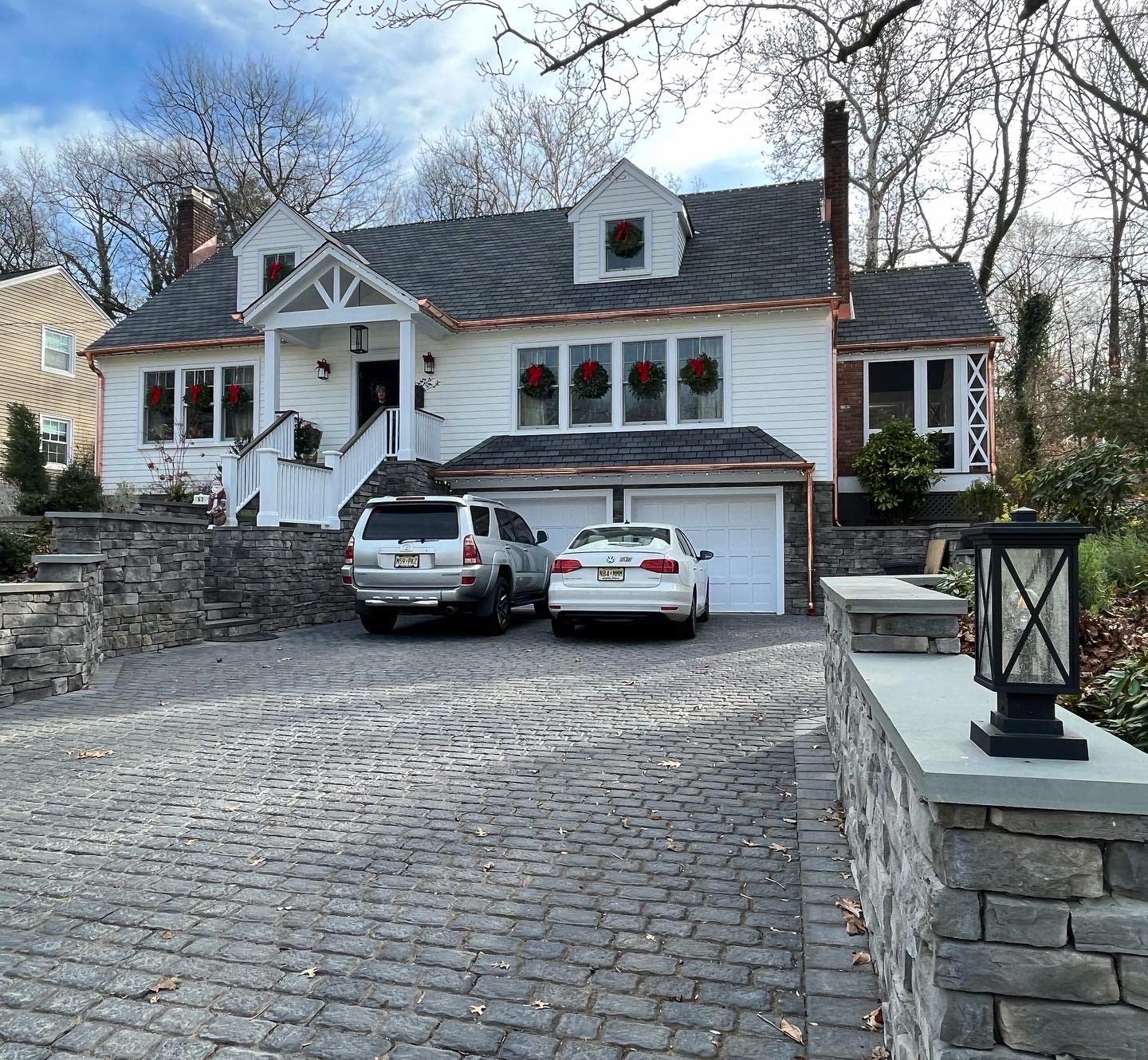
Planning becomes critical. On a simple roof, crews can move quickly in a straightforward pattern. On a complex one, each stage affects the next. Remove too much too soon and the home is more exposed if weather shifts. Rush a valley or wall flashing detail and the leak may not show up until months later.
This is one reason low bids on complicated roofs can be misleading. If the estimate doesn’t account for complexity, something usually gives, time, detail quality, or scope completeness.
In short, a complex roofline isn’t just “more roof.” It’s a more technical project. And it deserves pricing, materials, and scheduling that reflect that reality.
Roofing Materials That Perform Well In Northern New Jersey
Material choice should reflect climate, building type, slope, maintenance expectations, and budget. In Northern New Jersey, roofs need to handle wind, heavy rain, snow, ice, humidity, and large temperature swings. A product that looks good in a brochure but performs poorly under freeze-thaw stress isn’t a bargain.
The best roofing material is usually the one that fits both the structure and the exposure conditions. For many Essex County properties, that means focusing on systems with proven local performance, reliable manufacturer support, and installation methods appropriate to the roof design.
Asphalt Shingles
Asphalt shingles remain one of the most practical choices for many homes in Essex County, especially steep-slope residential properties. They’re widely available, cost-effective relative to many premium materials, and come in product lines that offer strong wind ratings and solid curb appeal.
But performance depends heavily on proper installation. Underlayment, ice-and-water protection in vulnerable areas, ventilation balance, flashing quality, and fastening patterns all influence how well the shingle roof holds up over time. On older homes, the supporting details matter just as much as the shingles themselves.
Flat And Low-Slope Roofing Systems
For commercial buildings, multifamily properties, and homes with porch roofs, additions, or modern low-slope sections, membrane-based roofing systems are often the better fit. These assemblies are designed to manage water differently than steep-slope roofs and need careful attention at seams, penetrations, drains, and edge conditions.
Read more: Clifton Roofing Roofer
The “best” flat or low-slope system depends on the building use, traffic expectations, drainage layout, and existing structure. What matters most is selecting a system appropriate to the property and installing it with strong detail work where low-slope roofs most often fail.
How Flexible Project Staging Helps Protect Your Property And Schedule
Roofing projects affect more than the roof. They affect driveways, landscaping, tenant access, delivery timing, outdoor equipment, and the daily rhythm of the people who use the property. That’s why flexible project staging matters.
On residential jobs, staging may involve protecting gardens, coordinating around limited driveway space, sequencing tear-off to reduce exposure, or planning around homeowner schedules. On commercial properties, it can mean restricting work to specific zones, preserving safe entry routes, coordinating with facility managers, and minimizing disruption during peak business hours.
Flexible staging is especially valuable on larger or more complex projects because it reduces friction. Instead of treating the property like an empty worksite, we plan for the fact that real people are still living there, working there, parking there, and moving through the space.
Good staging also supports better risk management. Materials are placed more strategically. Debris control improves. Access remains clearer. And when weather is unpredictable, as it often is in New Jersey, a staged approach can help crews secure sections efficiently without exposing more of the structure than necessary.
It’s one of those behind-the-scenes factors owners may not think about at first, but they feel the difference throughout the project.
What Written Workmanship Guarantees Mean For Homeowners And Property Managers
A written workmanship guarantee matters because verbal reassurance is easy. Accountability on paper is different.
For homeowners and property managers, a workmanship guarantee helps clarify that the contractor stands behind the installation itself, not just the materials supplied by a manufacturer. That distinction is important. Manufacturer warranties generally cover defects in the product under specific terms. Workmanship guarantees address how the roof was installed.
In practical terms, written guarantees can provide confidence that if an installation-related issue appears within the covered period, there is a documented commitment to address it. They also encourage clearer scope writing upfront, because everyone benefits when the responsibilities are spelled out before work begins.
That said, owners should read the details carefully. A meaningful written guarantee should define the covered work, the duration, any exclusions, and how service claims are handled. If the language is vague, the protection may be too.
Read more: COMMERCIAL ROOFING
For property managers especially, documentation matters. It supports maintenance records, helps with owner communication, and reduces the ambiguity that can turn a simple post-project question into a long phone chain.
Put simply: a written workmanship guarantee is not a marketing flourish. It’s part of a professional roofing process.
How To Choose The Right Roofing Contractor In Northern New Jersey
Choosing the right roofing contractor in Northern New Jersey comes down to more than price. Cost matters, of course. But with roofs, especially older homes and complex buildings, the cheapest number can become the most expensive outcome.
We recommend looking for a contractor who demonstrates a few core things clearly:
- experience with the type of property you actually own
- a thorough inspection process before quoting major work
- clear written scope, not vague allowances
- understanding of complex rooflines and local weather demands
- practical staging and site-protection planning
- written workmanship backing
- professional communication from first visit through completion
Ask direct questions. What did they observe during the inspection? Are they recommending repair or replacement, and why? What hidden conditions are possible on a house of this age? How will they protect landscaping, entrances, tenants, or parked vehicles? What happens if weather interrupts the project?
It’s also worth noticing how a contractor explains tradeoffs. Good roofers don’t pretend every option is perfect. They help owners understand durability, budget, timing, and risk in plain language.
At the end of the day, the right roofing contractor is the one who treats your project like a system to be solved carefully, not a quick sale. In Essex County, where building conditions vary so much, that mindset makes all the difference.
A roof has one job: protect everything beneath it. The contractor you choose determines how confidently it does that in the years ahead.
Key Takeaways
- Gikas Roofing Services emphasizes tailored roofing solutions to address the diverse and complex roofing needs of Essex County properties.
- Thorough pre-project inspections by Gikas Roofing Services identify hidden issues and guide whether repair or replacement is the most cost-effective approach.
- Roof replacement is recommended when multiple roofing problems coexist, especially for roofs with complex geometry to ensure long-term durability.
- Gikas Roofing Services offers specialized commercial roofing that minimizes disruption and addresses unique challenges like flat roofs and tenant safety.
- Flexible project staging is integral to Gikas Roofing Services’ approach, protecting property and ensuring smooth scheduling around residents and businesses.
- A written workmanship guarantee from Gikas Roofing Services provides homeowners and property managers with clear accountability and confidence in roof installation quality.
Gikas Roofing Services Frequently Asked Questions
What makes Gikas Roofing Services specialized in roofing for Essex County?
Gikas Roofing Services focuses on detailed inspections, practical recommendations, and tailored roofing strategies that consider Essex County’s diverse building types, local weather, and unique aging of roofs, ensuring durable and effective solutions.
When should I consider a full roof replacement instead of repairs?
A full replacement is advisable when there are multiple recurring leaks, widespread shingle wear, frequent patching history, soft decking, flashing failures at various points, or when the roof has reached the end of its lifespan, especially on complex roof systems.
How does Gikas Roofing Services ensure minimal disruption during commercial roofing projects?
They implement flexible staging to coordinate work around business hours, ensure occupant safety, limit disruptions, maintain clear communication with tenants and managers, and plan the project to fit operational needs for multifamily and commercial buildings.
What key components are evaluated during a pre-project roof inspection by Gikas Roofing Services?
Inspections cover the condition of roofing materials, flashing, decking integrity, drainage patterns, attic ventilation, previous repairs, and surrounding factors like tree contact and debris to identify hidden issues and inform appropriate solutions.
Which roofing materials are recommended by Gikas Roofing Services for Northern New Jersey climates?
They recommend asphalt shingles for steep-slope residential roofs due to their durability and cost-effectiveness, and membrane-based systems for flat or low-slope commercial buildings, focusing on materials that withstand wind, rain, snow, ice, and temperature changes.
Why are written workmanship guarantees important when hiring a roofing contractor?
Written workmanship guarantees provide documented accountability for installation quality, clarify the scope and duration of coverage, and give property owners confidence that installation-related issues will be addressed beyond manufacturer warranties on materials.
Read More:
- ministryofmen.gr
- Private Tours In Santorini: How To See The Island Your Way – Ministry Of Men
- Media Buying: Ο Απόλυτος Οδηγός Επιτυχίας για Ψηφιακές και Παραδοσιακές Καμπάνιες σήμερα – Ministry Of Men
- Alpha Ermis: Ο Ολοκληρωμένος Οδηγός Μεταφράσεων και Νομικών Υπηρεσιών στην Ελλάδα – Ministry Of Men
- Τελευταία Νέα Σήμερα: Ο Οδηγός Επιβίωσης στην Καταιγίδα της Ψηφιακής Ενημέρωσης – Ministry Of Men
- Ειδήσεις Τώρα: Πώς Να Ενημερώνεστε Γρήγορα, Έγκυρα Και Χωρίς Θόρυβο Σήμερα – Ministry Of Men

